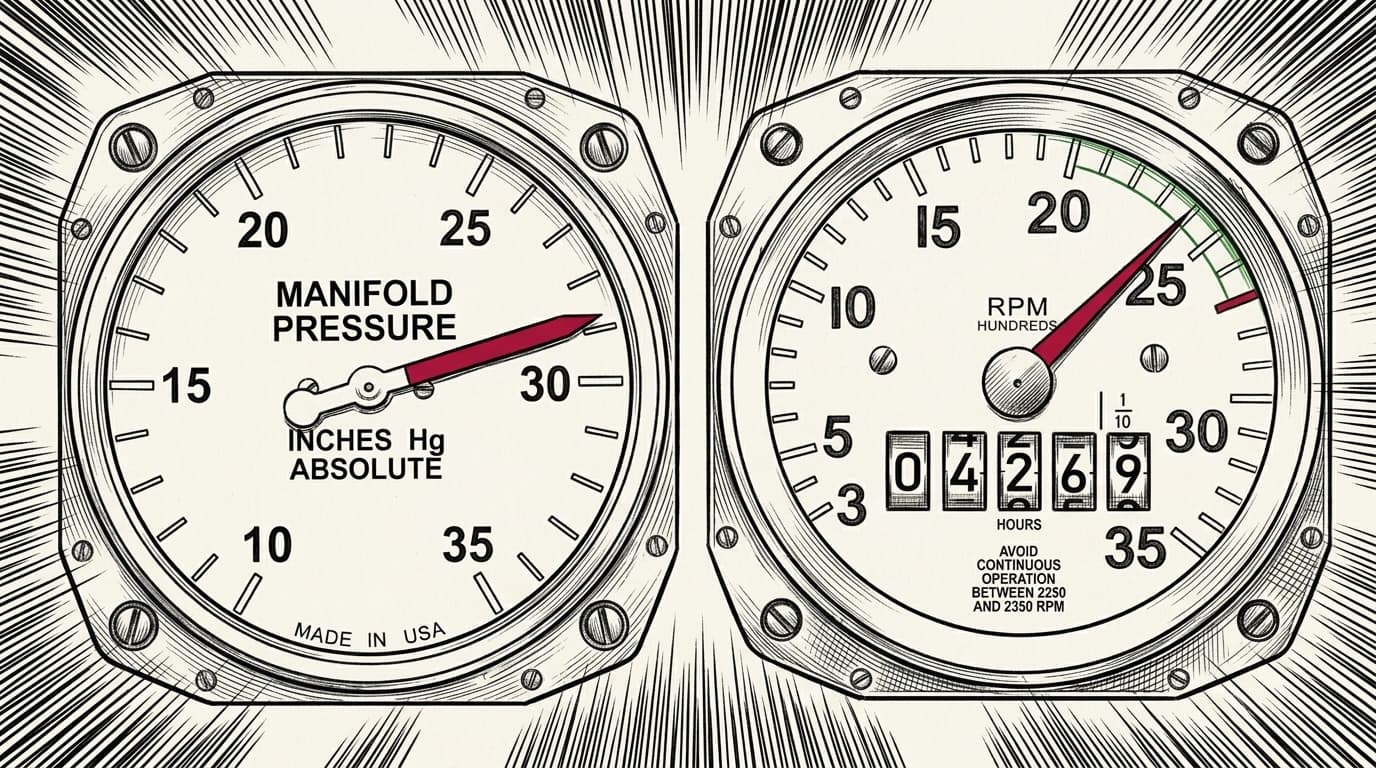
Oversquare won't blow up your engine. Your instructor was wrong.
Every pilot who trained on complex singles heard the same warning. Never let manifold pressure exceed RPM divided by 100. If you're at 2,400 RPM, keep MP under 24 inches. Cross that line and you'll blow the cylinders right off the engine.
It's wrong, and the engine manufacturers have been quietly saying so for eighty years.
Mike Busch of Savvy Aviation worked through the whole story in an EAA webinar called Operating Oversquare. He starts the talk as a new Cessna 182 owner in 1968 being drilled on exactly the same rule everyone else gets drilled on. Reduce manifold pressure before reducing RPM. Increase RPM before increasing MP. Lean to 125 degrees rich of peak. Never go oversquare. If he'd actually believed any of it for the rest of his flying career, both engines on his Cessna 310 wouldn't have made it to 220% of TBO.
Lindbergh got there first
The story of how oversquare operation became aviation gospel, and then quietly got disproved, runs through the Second World War.
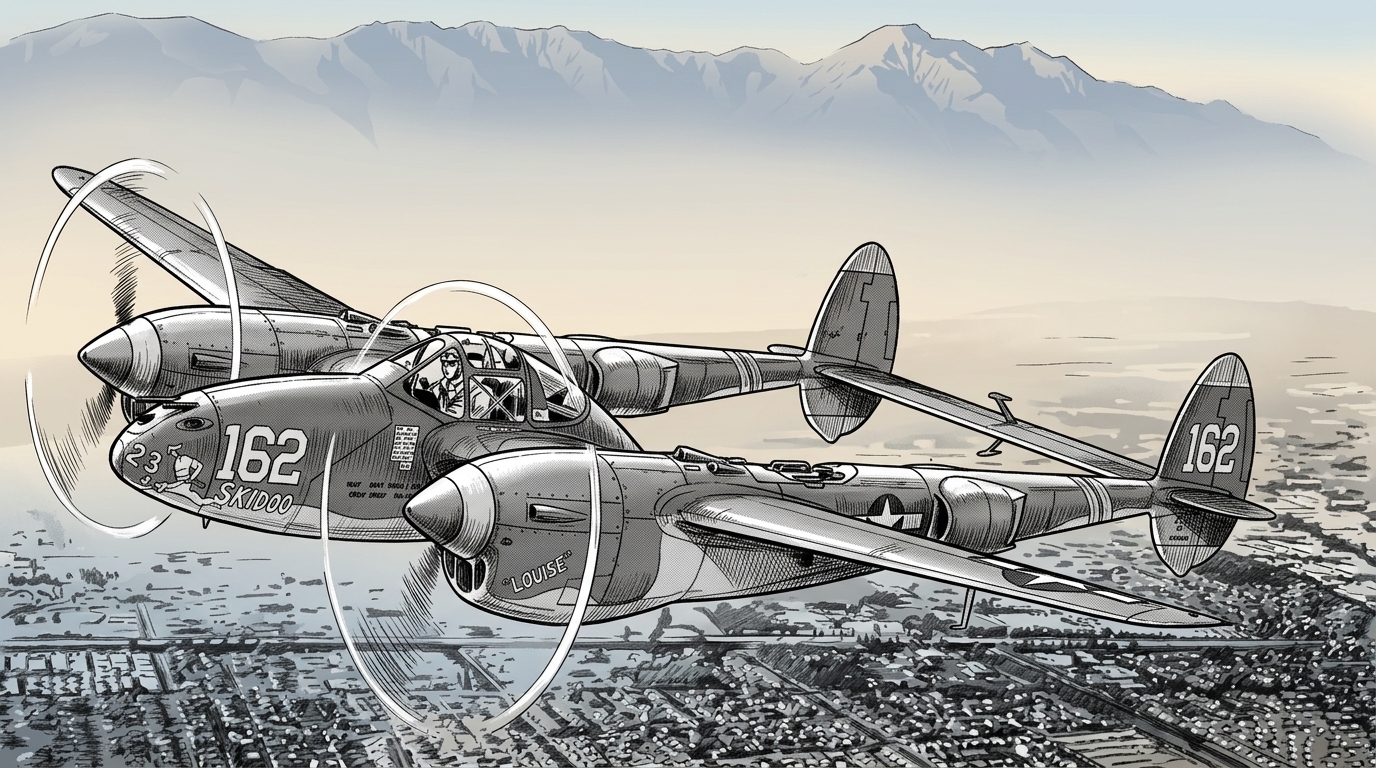
Charles Lindbergh spent part of the war teaching American bomber and fighter crews how to stretch their range. His technique was specific: high manifold pressure, low RPM, aggressively lean mixture. Exactly the combination their flight instructors had told them would destroy the engine.
The P-38 Lightning was considered to have a maximum range of 400 miles when Lindbergh showed up. After he taught the crews his power management technique, they were stretching it to 950. More than double, on an airplane that was supposed to be maxed out.
At first the pilots didn't want to do it. They'd been taught the same thing everyone else had been taught. Eventually the results spoke for themselves and the technique became standard operating procedure.
Then the war ended, the lessons faded, and civilian flight instruction went back to teaching the old rule.
What Continental and Lycoming actually say
Busch went looking for the official word. Not in the POH, which is a conservative document written by the airframe manufacturer, but in the engine operator's manuals published by Continental and Lycoming directly.
Both companies publish a chart. Horsepower on the vertical axis, manifold pressure on the horizontal axis, RPM as diagonal lines, and a shaded envelope they call the recommended cruise region. The top edge of that envelope is where things get interesting.
For the Continental IO-520, the envelope runs two and a half to four inches oversquare along that top edge. For the Lycoming O-360, it goes to five. These are the engine builders saying, in print, that their engines are designed to run in territory your CFI told you would blow the cylinders off.
Find your engine's operator manual, locate the recommended cruise envelope, and read the top edge. That's the real oversquare limit. Not the rule of thumb someone taught you in a rental 182.
Nothing inside the engine objects to high MP with low RPM. The rule of thumb was just easier to teach than a chart.
Why oversquare is actively better
The rule doesn't just fail to prevent damage. It makes you fly the engine worse.
Start with noise. Propeller tip speed drops, which means fewer shockwaves coming off the blades and less cabin racket. Whatever noise is left sits at a lower frequency, which ANR headsets handle much better than the high-pitched stuff. You notice it on the first flight after you try it.
The engine itself runs with less internal friction. The dominant loss in a piston engine is the rings scraping up and down the cylinder walls, and that loss grows faster than linearly with RPM. Spin the engine slower and more of the chemical energy you paid for at the pump actually shows up as thrust on the prop instead of heat in the cylinders.
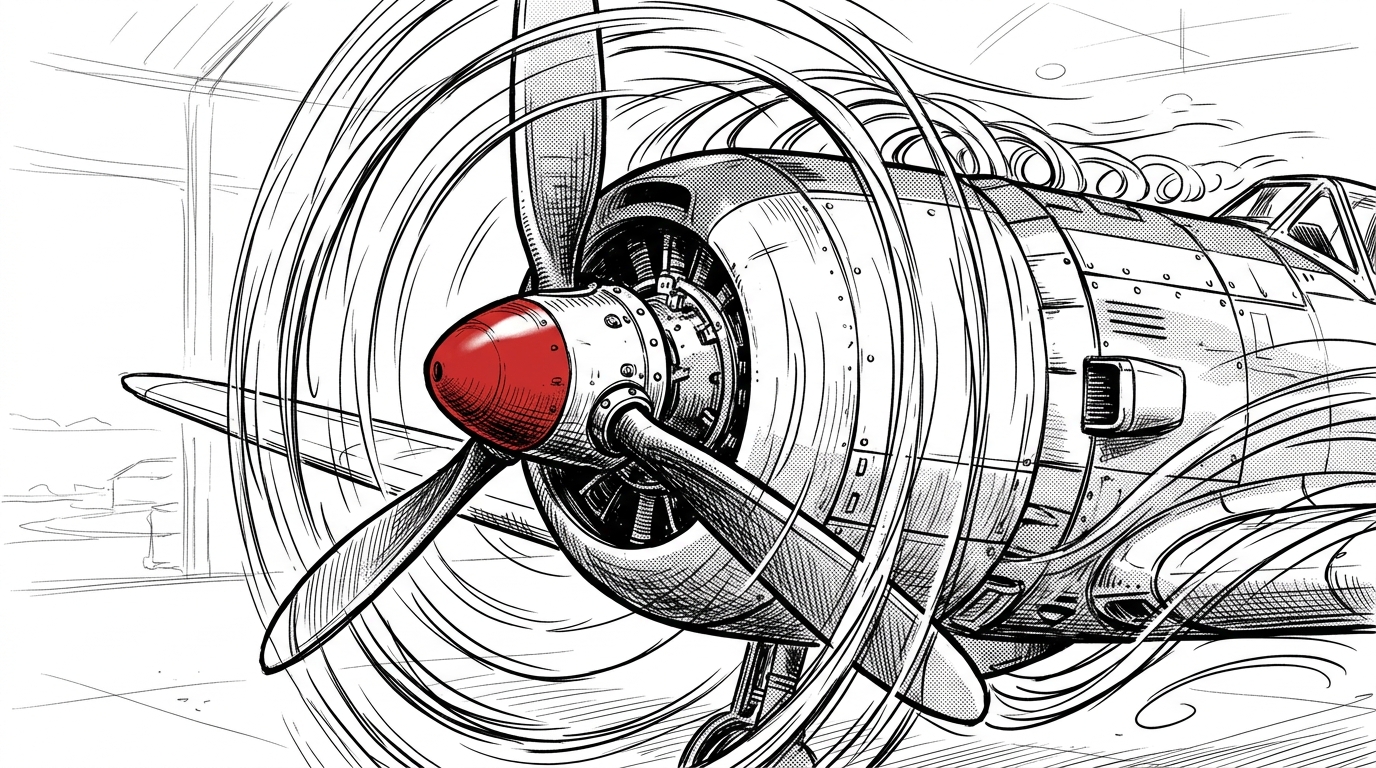
Props, for their part, like to turn slowly. A fast-spinning prop burns a chunk of its input energy generating acoustic shockwaves instead of thrust, which is why geared engines and turboprops always run their props well under 2,000 RPM when they can. Your direct-drive engine forces a compromise between what the engine wants (high RPM) and what the prop wants (low RPM). Every RPM you can shave off moves the prop toward its happy place.
And then there's breathing. Volumetric efficiency improves at low RPM because there's more time to pull a full charge through the intake valves. Opening the throttle further also cuts the pumping losses across the throttle plate. Wide open throttle, low RPM - that's the volumetric sweet spot, and it's exactly what the oversquare rule tells you not to do.
The real reason: time for combustion
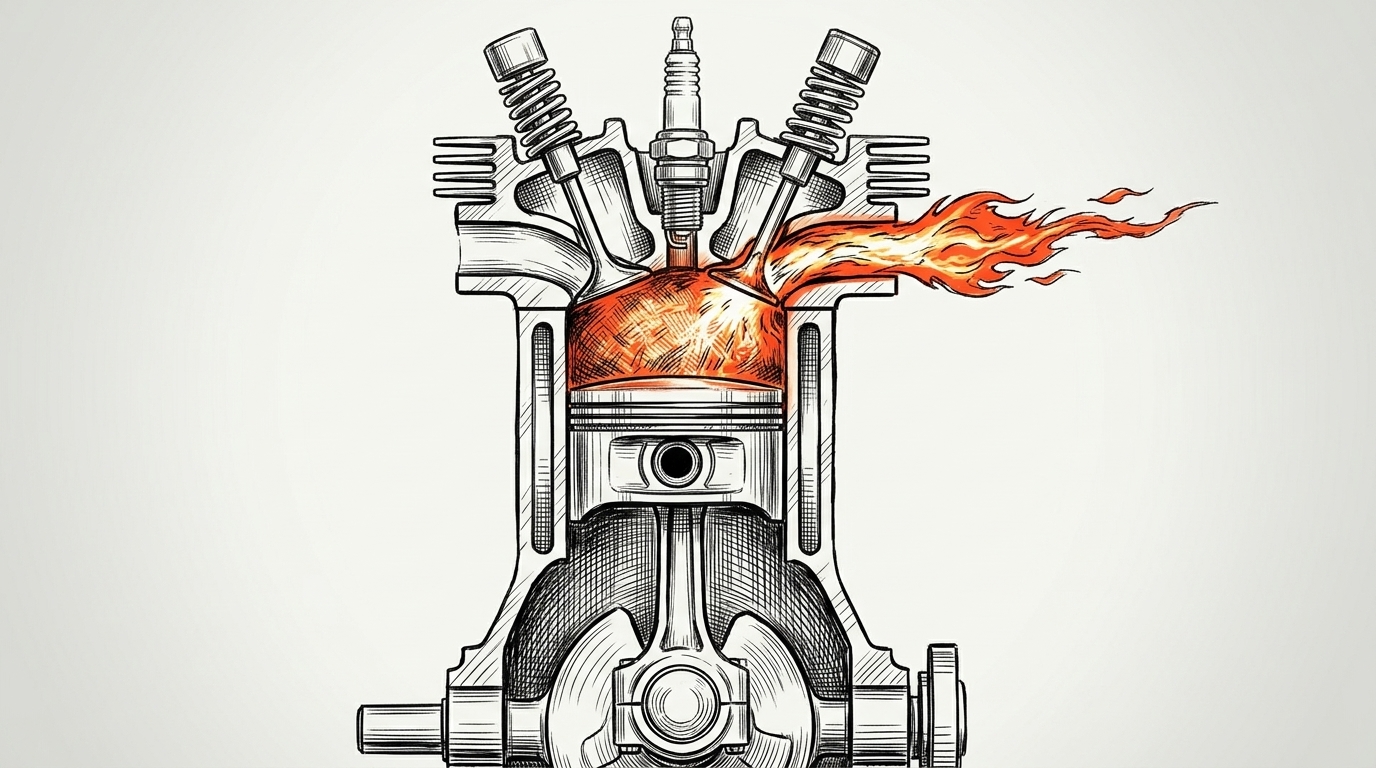
The subtle benefit, and the one that matters most when you're running lean of peak, is that lower RPM gives the combustion event more time to finish before the exhaust valve opens.
When you lean past peak EGT, the flame front propagates more slowly through the cylinder. Peak pressure is lower, the burn takes longer, and more of that energy needs to be extracted before the exhaust valve swings open and dumps whatever's left out the back. A fast-turning engine doesn't give lean combustion enough time. You end up dumping usable pressure out the exhaust, and in extreme cases the charge is still burning when the valve opens, which is exactly what a backfire is.
A FADEC engine could solve this by advancing the ignition timing when it detects lean operation. Your airplane doesn't have FADEC. It has fixed-timing magnetos that fire the plugs at the same crankshaft angle no matter what. The only tool you have for giving combustion more time is the propeller control.
Slow the prop, slow the crankshaft, give the lean burn enough time to do its work. That's what low RPM buys you when you're LOP.
The F-33A test that proves it
Busch ran an instrumented test in a Beech F-33A Bonanza with a Continental IO-520. Same engine, same airplane, two cruise configurations, both lean of peak.
The first was oversquare: 27 inches MP, 2,100 RPM (six inches oversquare). The second was undersquare: 21 inches MP, 2,500 RPM.
Fuel flow was nearly identical in both runs, which at lean of peak means horsepower output was nearly identical. Same work, different gearbox.
CHTs in the undersquare configuration ran noticeably hotter. That's frictional loss from the higher RPM, showing up as waste heat in the cylinder heads instead of thrust on the prop. EGTs in the oversquare configuration were dramatically cooler, because the slower engine had more time to extract energy from the charge before venting it.
Same horsepower, cooler everywhere. The data lines up with the theory.
The Cape Air exception
There's one caveat worth knowing about, if only because someone will bring it up.
In 2009 Continental issued Service Bulletin CSB09-11 recommending their big-bore engines (IO-470, IO-520, IO-550, normally aspirated and turbocharged) never be operated below 2,300 RPM in cruise. The bulletin came out after Cape Air grounded their fleet of Cessna 402Cs over a rash of engine failures traced to crankshaft counterweight wear.
The bulletin is broad and alarming on its face. The backstory is narrower. Cape Air flew their 402s on very short hops between Boston, Nantucket, Martha's Vineyard, and Hyannis. High cycle counts, 500+ hours per year per airplane, and cruise legs so short they barely justified raising the gear. Crucially, they operated rich of peak in cruise, deep inside the red box that punishes crankshafts with high internal cylinder pressure and high torsional stress.
Busch's own Cessna 310 runs the same TSIO-520 family engine. He flies long legs, far oversquare, lean of peak. His right engine came off at 220% of TBO with no abnormal wear on the counterweight pins or bushings. Same engine, completely different damage profile, because the way he operates it doesn't load the crankshaft the way Cape Air's operations did.
The bulletin is a service bulletin, not an AD. You can follow it or not. Just understand that it was written for a specific failure mode in a specific operating environment, not as a blanket verdict on low RPM.
The Cirrus that couldn't stop backfiring
One story from the webinar puts the physics in concrete form.
A new Cirrus SR22 owner, flying a brand-new Continental IO-550, kept getting engine stumbles and backfires in cruise. Warranty intact. He took it to the shop. Continental shipped a new fuel pump. No change. Continental shipped a new fuel control unit. No change. Third trip, they replaced the manifold valve. Still no change. His wife stopped flying with him.
He called Busch in frustration and sent over his engine monitor data. The problem showed up in thirty seconds. He was cruising lean of peak at 2,700 RPM.
At 2,700 RPM, a lean-of-peak combustion event doesn't finish before the exhaust valve opens. The remaining mixture keeps burning in the exhaust system. That's the backfire. Nothing wrong with the fuel system, the injectors, or the engine. Wrong RPM for the mixture setting. Bring the RPM down to 2,500 or lower and the symptom disappears, because now the burn has time to complete before the valve opens.
The shop never thought to look at how the pilot was operating the engine. Everyone assumed it was hardware. It was technique. Three warranty claims and a spooked family later, the fix was a different number on the RPM gauge.
How Busch actually flies his 310
If you ever rode along with Mike in his Cessna 310, you'd be struck by how little he touches the power controls.
Takeoff is full throttle. He doesn't touch the throttle again until it's time to land. Climb, cruise, descent - all at 32 inches of manifold pressure. He jokes that he'd tie-wrap the throttle wide open if he could figure out how to land that way.
RPM gets reduced twice. Once after he climbs through about a thousand AGL, to cruise climb. Again when he levels off for cruise. After that, the prop control doesn't move until the engine shuts down at the destination.
Mixture is full rich from start to top of climb (the engine is turbocharged, so it doesn't auto-lean on the way up). At level-off, a big mixture pull to lean of peak, and it stays there until shutdown.
Three control inputs between takeoff and landing, and two of them are the mixture.
What the manufacturers' limits really mean
Busch is careful about what he does and doesn't recommend. He'll tell you the engine manufacturers permit considerably more oversquare operation than conventional teaching allows. He'll show you his own operations, which are further oversquare than the published limits, and explain why he's comfortable with them because he runs lean of peak. He won't tell you to ignore the manufacturer's chart on your own engine.
Fair enough. The right starting point for any pilot rethinking this is simple:
- Pull the operator's manual for your engine (not the airframe POH, the engine manual from Continental or Lycoming).
- Find the recommended cruise envelope chart.
- Read the top edge. That's how far oversquare your engine is designed to run.
Most pilots will find they can go two to five inches oversquare without leaving the manufacturer's envelope.
None of this applies, by the way, if you're flying a fixed-pitch prop. You don't have independent control over manifold pressure and RPM, so oversquare isn't really a concept in your cockpit. Lean of peak is still available to you and still worth learning. The prop-RPM trick is a constant-speed prop feature.
The short version
The rule you were taught (MP must never exceed RPM divided by 100) was a simplification that turned into dogma somewhere along the way. The engine manufacturers never believed it. Lindbergh disproved it during the war. The engine monitor data we have now says the same thing his P-38 fuel logs said.
Oversquare operation, especially combined with a lean-of-peak mixture, gives you cooler cylinders, a more efficient propeller, and better range. The engine won't blow up. It will probably outlast TBO by a huge margin.
Both engines on his Cessna 310 made it to 220% of TBO. That's what operating oversquare and lean of peak did for Mike Busch. Not what the 1968 POH predicted. Not what his CFI predicted. What actually happened.
This article is based on the Savvy Aviation webinar Operating Oversquare by Mike Busch.
Source: Operating Oversquare - Mike Busch / EAA Webinar Series