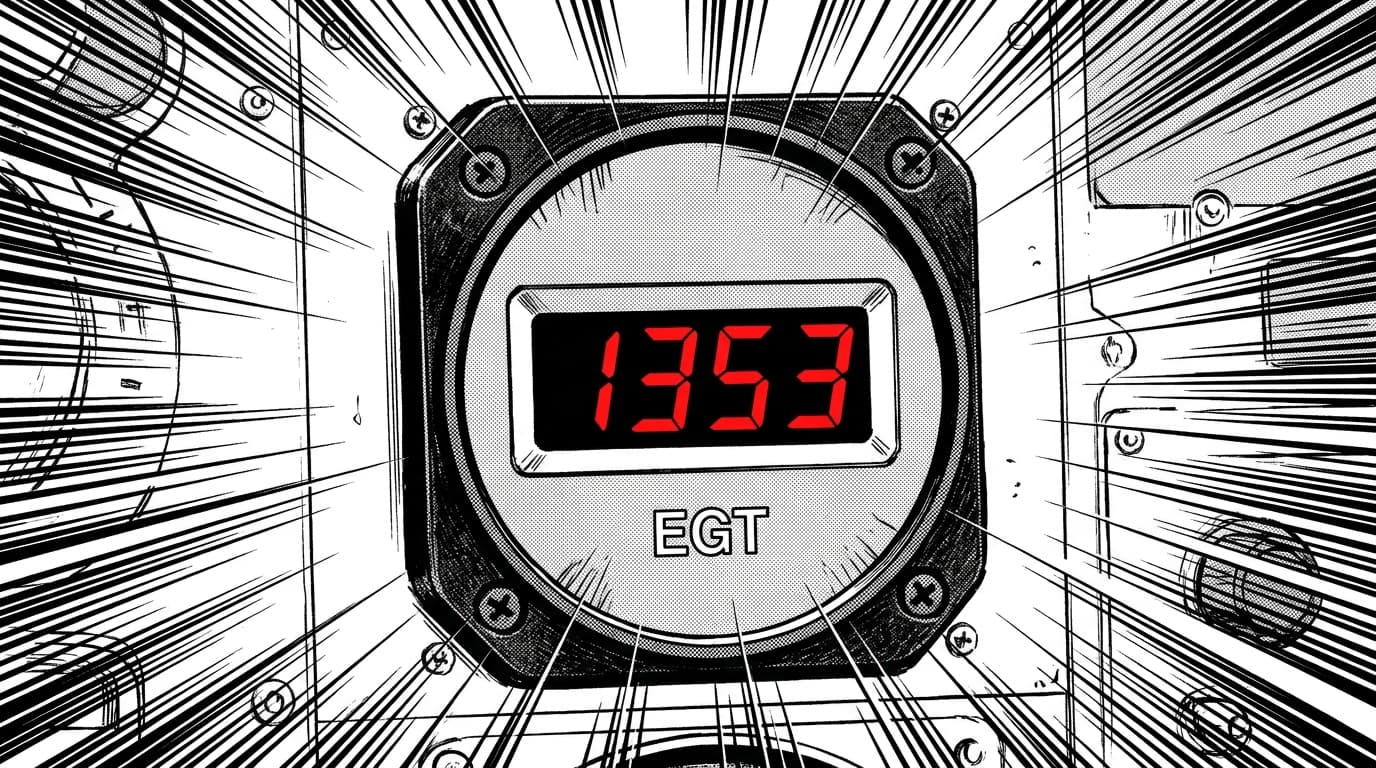
Peak EGT is not a temperature worth chasing
Mike Busch answers more than a hundred questions from aircraft owners every week, and he says a dozen or two of them are always about leaning. Most of the leaning questions turn out to be EGT questions. My POH says lean to 50 degrees rich of peak, but you say don't. Which cylinder should I use to find peak, the first to peak or the last? How many degrees lean of peak do you run your own engines?
His answer to that last one is the punchline of an entire EAA webinar called Obsessed With EGT: he has no idea. He's flown his Cessna Turbo 310 lean of peak for decades, got 230% of TBO out of its engines, and he cannot tell you how many degrees lean of peak he cruises. He's never measured it. He doesn't care.
That sounds like a contradiction until you understand what EGT actually is, why it peaks where it peaks, and what happens inside a cylinder while you're slowly pulling the mixture back hunting for that peak. Then it starts to sound like the only sensible position.
Why EGT peaks at all
Combustion in a gasoline engine is a chemical reaction between octane and oxygen. Burn them in exactly the right proportion and nothing is left over: no unburned fuel, no unused oxygen, just carbon dioxide, water, and a lot of heat. Chemists call that ratio the stoichiometric mixture, and for avgas it works out to 14.7 parts of air to one part of fuel, by weight.
EGT peaks exactly at the stoichiometric mixture. Go richer and the extra fuel can't burn, because there's no oxygen left for it. It evaporates instead, and evaporation soaks up heat, so the exhaust runs cooler. Go leaner and there's less fuel burning in the first place, so less heat gets released and the exhaust cools again. Either direction away from chemically perfect, EGT drops. That's the whole mystery of peak EGT. It's a chemistry marker, nothing more.
Here's the part pilots skip past: chemically perfect is not operationally optimal. Best power lives at around 12.5:1, which is well rich of peak, about 100 to 125 degrees F on the rich side. The excess fuel makes the flame front burn faster, pressure builds harder, and you get a little more horsepower along with a filthy exhaust that coats your valve stems and spark plugs with deposits. Best economy lives near 16:1, well lean of peak. That mixture burns slowly, gently, and remarkably clean. Busch says you can tell how a pilot leans the moment you put a borescope into a cylinder. Lean of peak engines look clean inside. Rich of peak engines look like a fireplace.
Peak EGT itself, the place the gauge is begging you to find, is optimal for almost nothing. It doesn't give best power. It doesn't give best economy. It's just the tipping point between two different worlds.
Two different worlds, two different power knobs
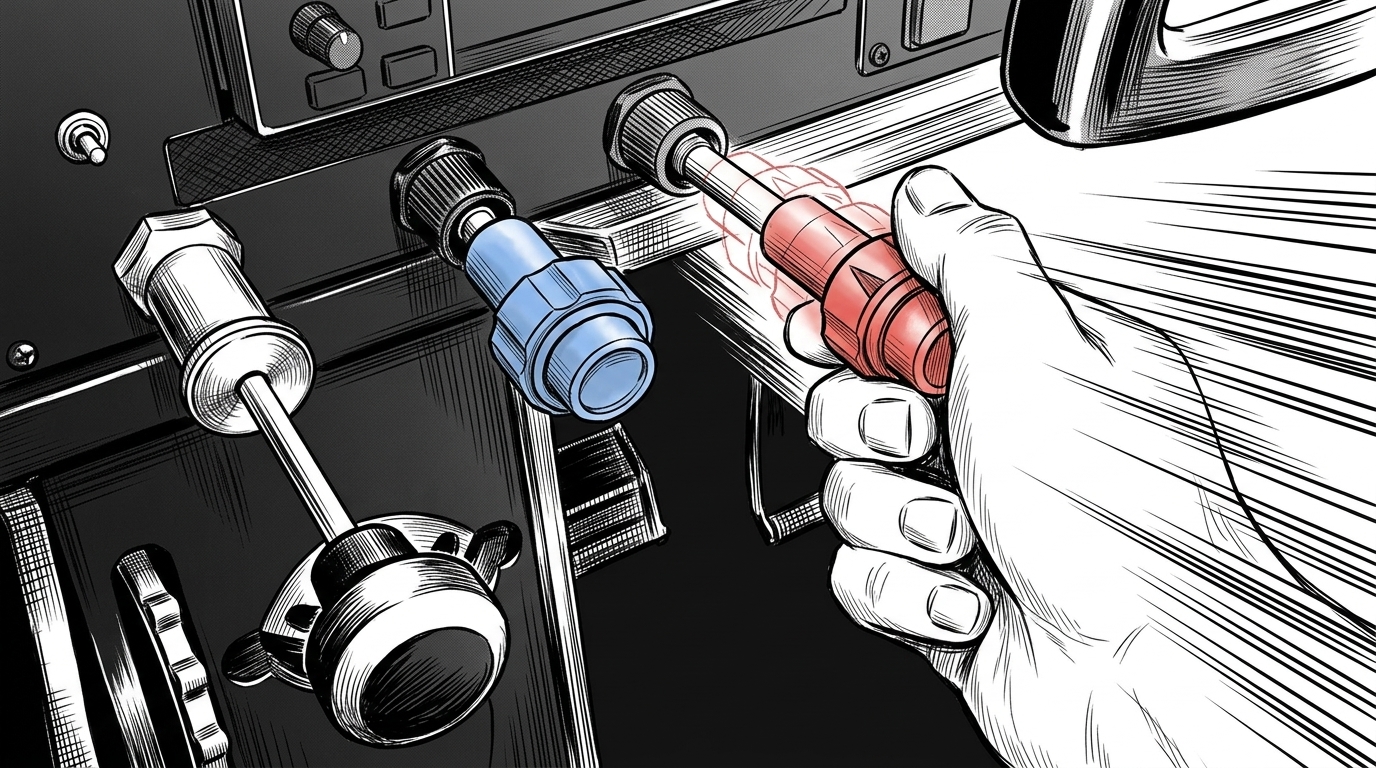
Rich of peak, the engine has more fuel than it can burn, so air is the scarce ingredient. Power is set by how much air flows through the engine, which is manifold pressure times RPM. The black knob and the blue knob.
Lean of peak, the situation flips. Now there's more air than the fuel can use, so fuel is the scarce ingredient, and power is set by fuel flow alone. Horsepower becomes a simple multiplication: fuel flow in gallons per hour times a constant that depends on compression ratio. Around 14.9 for a normally aspirated engine with 8.5:1 compression, 13.7 for a 7.5:1 turbocharged engine like Busch's.
Lean of peak, the red knob is your power lever. The throttle is just along for the ride.
Busch points out that a lean of peak piston engine behaves like a turbine. Turbines always run with far more air than they need, and the power lever in a King Air is a fuel flow control. When you cruise lean of peak, your Continental works the same way. This is why Busch takes off at full throttle and leaves the throttle alone until it's time to land. Power changes in cruise happen with the mixture.
The red box
The measure of stress that actually wears out cylinders is peak internal cylinder pressure, ICP. GAMI's test facility in Ada, Oklahoma measures it directly with instrumented spark plugs wired into the test stand computers. George Braly's research there is the reason we know what we now know, and what we know is uncomfortable: internal pressure and temperature are at their worst right around 50 degrees rich of peak.
That's the exact setting most 1960s and 70s POHs recommend for cruise. The engineers who wrote them believed 50 ROP was a good spot and were nervous about the lean side. Fifty years of research later, it turns out they were parking every engine in the most stressful mixture setting available. Busch is not convinced the manufacturers minded: cylinder replacements are an expense for you and a profit center for them.
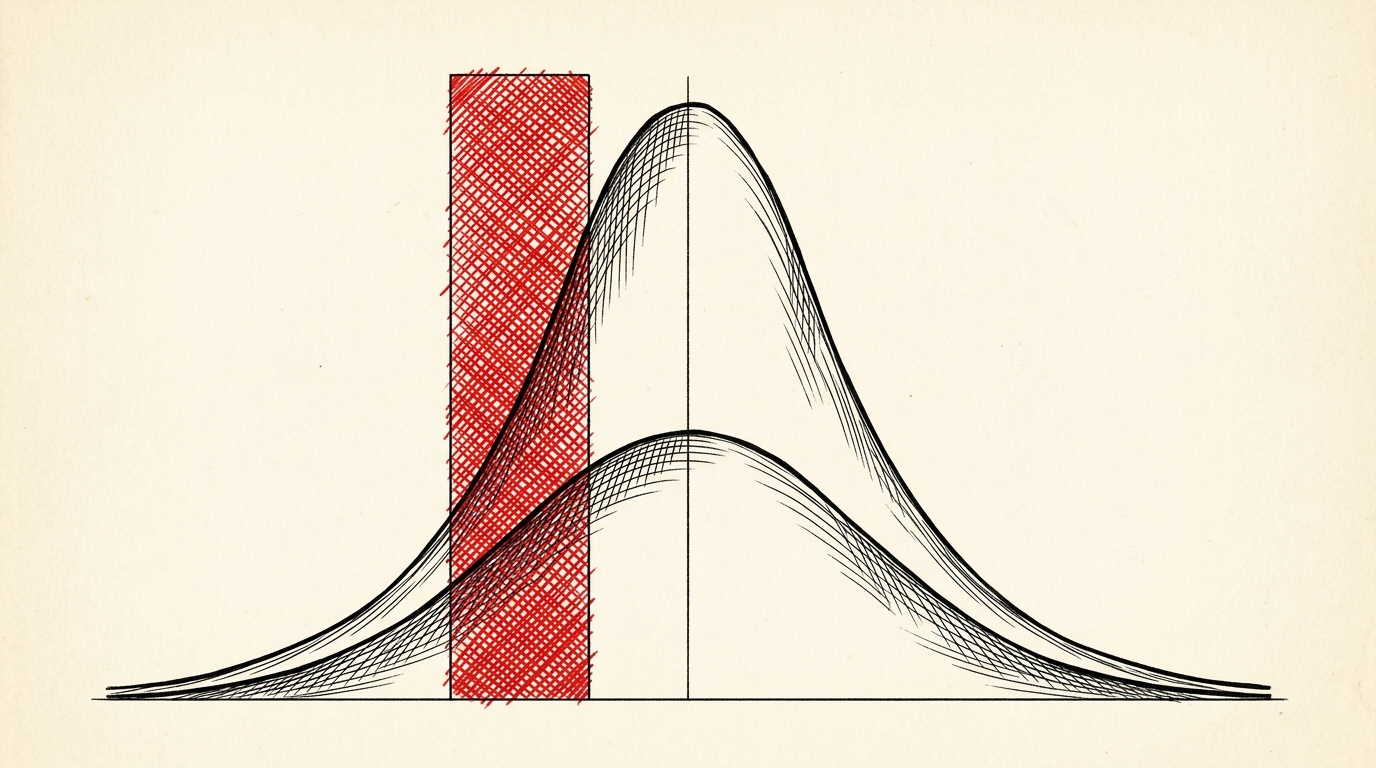
Braly drew the abusive region as a red box on the mixture axis, centered near 50 ROP. You escape it by going much richer or much leaner. And since none of us has ICP sensors in our airplanes, we watch the best proxy we have, which is cylinder head temperature. The CHT curve has nearly the same shape as the ICP curve and peaks in the same place.
Keep CHT under 400 degrees F on a Continental, under 420 on a Lycoming, and you're outside the red box.
The box also changes size with power. At 75% power it's wide. Pull back to 70% and it shrinks. At 60% power or less it disappears entirely, and the mixture knob can go anywhere you like without abusing anything. If Busch were flying pipeline patrol at 60% power, he says he'd happily cruise right at peak EGT, because down there peak EGT stops being a bad neighborhood.
The problem with leaning by EGT
Now put the pieces together and look at what leaning to an EGT target actually requires you to do.
To lean to 50 rich of peak, or 30 lean of peak, or any number referenced to peak, you first have to find peak. Finding peak means pulling the mixture back slowly, because EGT probes respond with a lag and rushing it means overshooting. So there you are, creeping the red knob back at cruise power, drifting through the exact mixture range that produces maximum internal cylinder pressure while a slow gauge makes up its mind.
The procedure your avionics call "lean find" is a guided tour of the worst place your engine can be.
Busch has evidence for how much this matters, and it comes from an unexpected direction: spark plugs.
The canary in the coal mine
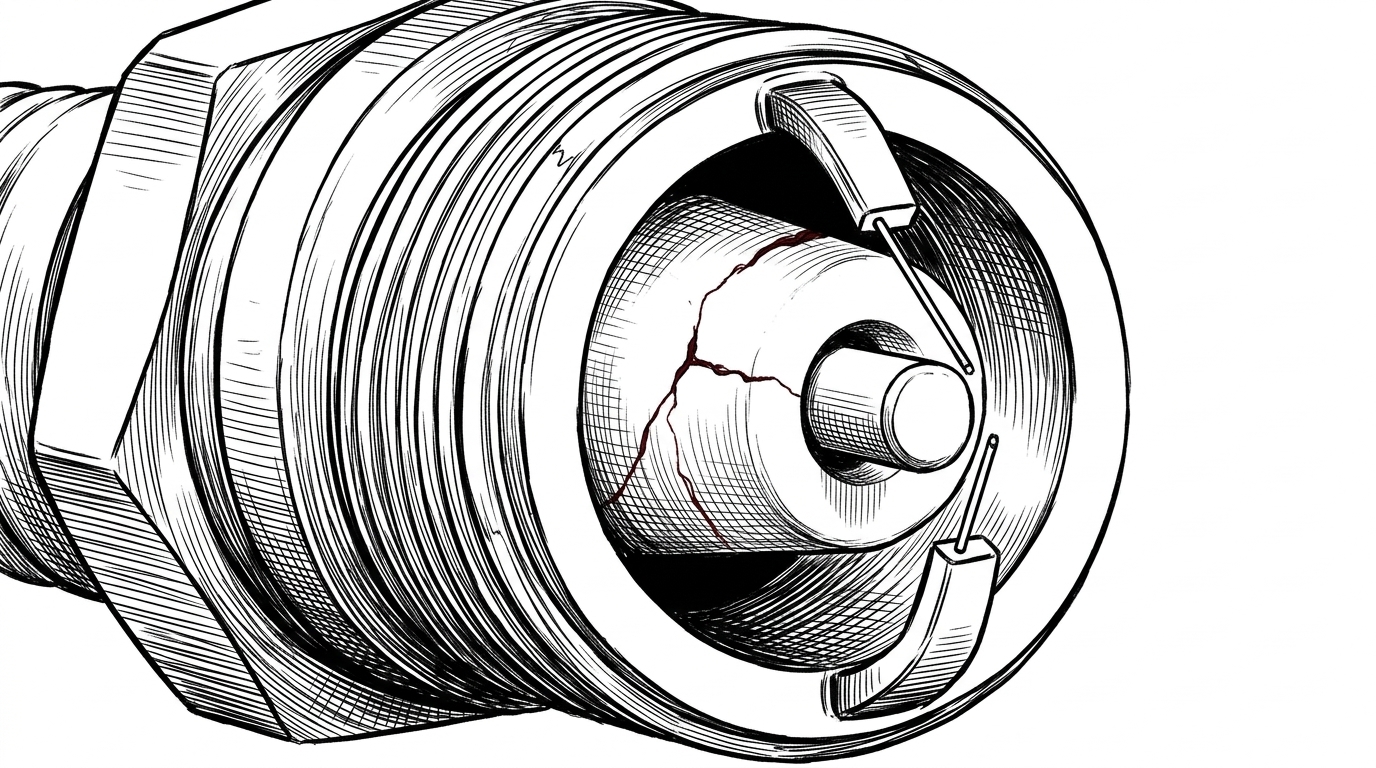
Around 2010 and 2011, Savvy started seeing an epidemic of cracked ceramic nose core insulators on Champion fine wire spark plugs. A cracked insulator is not a cosmetic problem. It can trigger pre-ignition, and pre-ignition can put a hole in a piston. The failures showed up across the fleet but clustered heavily in Cirrus SR22s, especially turbocharged ones. It got serious enough that Cirrus issued a service bulletin pulling Champion fine wires from service, and Continental stopped shipping engines with them.
Champion pushed back with a service letter of its own, essentially blaming the customers: Cirrus pilots run lean of peak, and lean of peak operation, they claimed, invites detonation and pre-ignition. Busch's team wasn't buying that, since decades of lean of peak operation kept producing clean, long-lived engines. They brought in Bill Brogdon, a retired Continental VP of engineering, and dug into the data.
The answer was neither the spark plugs nor lean of peak cruise. It was the transition. In 2008 Cirrus had switched from Avidyne to Garmin Perspective avionics, and the Perspective had a lean find page that Cirrus encouraged pilots to use. Lean find walks you slowly through the mixture sweep to locate peak EGT before it gives you guidance. Every flight, obediently, thousands of pilots dawdled through the red box at cruise power. The cylinders went into mild detonation every time. The cylinders themselves shrugged it off, but the fine wire insulators, over a hundred dollars a plug, cracked like eggshells.
The spark plugs were the canary in the coal mine. The engines were being put into mild detonation on every flight, and the leaning procedure was the reason.
The epidemic tracked the avionics change, not any change at Champion's factory. Champion's diagnosis was wrong, but as Busch admits, it wasn't wrong by much. Lean of peak wasn't hurting anything. Getting there slowly was.
The big mixture pull
The fix costs nothing and takes two seconds. When it's time to transition from climb power to lean of peak cruise, grab the red knob and haul it back briskly. Braly named it the big mixture pull. You pass through the red box in a second or two instead of camping in it, and mild detonation never gets a chance to develop.
How do you know where to stop, without any EGT reference? Pull until you feel the engine lose a little power. Rich of peak, power barely changes with mixture, because power is set by airflow. The moment power starts dropping with fuel flow, you are by definition lean of peak, and you can feel and hear it happen without looking at a single instrument.
Pull until it runs rough and you're definitely lean of peak, though Busch notes that if your significant other is in the right seat and asks "what was that," the technique needs refinement. After some experience you'll simply know the fuel flow number that puts you in the right spot for your altitude, and you can lean straight to it.
Then wait a minute or two. CHT has enormous thermal mass and responds slowly. Once things stabilize, check that your CHTs are under control and nudge the mixture if you want a bit more power or a bit more economy.
What Busch actually watches
So if not EGT, what does he look at in cruise? Two things. CHT, because that's the red box proxy, and his fuel totalizer, because lean of peak, fuel flow is horsepower. His totalizer is coupled to the GPS and reads out nautical miles per gallon, so squeezing maximum range out of the airplane is a matter of adjusting the red knob until that number tops out. It also tells him how much fuel he'll have at his destination, which needs to be at least an hour's worth.
None of this makes EGT useless. It's a superb diagnostic tool. A spark plug quits firing and that cylinder's EGT jumps 50 to 100 degrees, which tells you to run an in-flight mag check. An alarm on the spread between highest and lowest EGT catches outlier cylinders early. Those uses are worth having. What EGT can't tell you is any absolute number worth acting on. There is no meaningful EGT red line, and Busch would turn off any absolute EGT alarm his instrumentation allowed him to. The exception is TIT on a turbocharged engine, measured downstream where the exhaust streams merge. That one is a real temperature with a real red line protecting real turbocharger hardware.
A few odds and ends from the Q&A worth keeping. Carbureted Lycomings run lean of peak surprisingly well thanks to their symmetrical induction systems; carbureted Continentals with the rear-mounted carb, like the O-470 in a 182, struggle. Lean of peak at low altitude is fine, since a turbocharged engine thinks it's at sea level all the time anyway. Run the GAMI lean test at 65% power or less, where the red box has faded away, because the test requires exactly the slow mixture sweeps you should never do at cruise power. And during break-in, forget all of this and run the engine hard and rich: for that first hour you actually want maximum cylinder pressure.
The short version
EGT peaks at the chemically perfect mixture, and chemically perfect is good for nothing you care about. Best power is well rich of it, best economy well lean of it, and the worst abuse your engine can absorb sits 50 degrees rich of it, right where the old POHs told you to cruise.
Chasing an EGT target means hunting for peak, and hunting for peak means loitering in the red box. A fleet of Cirrus SR22s proved what that costs, one cracked hundred-dollar spark plug at a time.
Watch CHT to stay out of the red box. Watch fuel flow to set power. Get through the middle with one brisk pull of the red knob. EGT is for troubleshooting, not for leaning.
This article is based on the Savvy Aviation webinar Obsessed With EGT by Mike Busch.