Mike Busch flies a Cessna Turbo 310, which is a fine airplane and an expensive habit. At takeoff power it drinks 340 pounds an hour. Leaned as hard as he can get it in lean of peak cruise, it still wants 160 pounds an hour. With avgas around six dollars, a pound of fuel costs roughly a dollar, so the arithmetic is unpleasantly simple.
One summer he flew a trip that went Santa Maria to Illinois by way of Denver, then Milwaukee, then Mobile, then Tennessee, Ohio, Washington, Boston, Grand Rapids, Oshkosh and home. Fifty days, 6,500 nautical miles, about 40 hours on the Hobbs. Twelve hundred gallons of 100LL, and seventy-five hundred dollars of fuel.
So when he talks about flying efficiently, he is not doing it as an intellectual exercise.
The good news is that most of it comes down to four decisions, three of which are knobs you already have. The fourth is a number almost nobody was taught, and it is the interesting one.
The three knobs
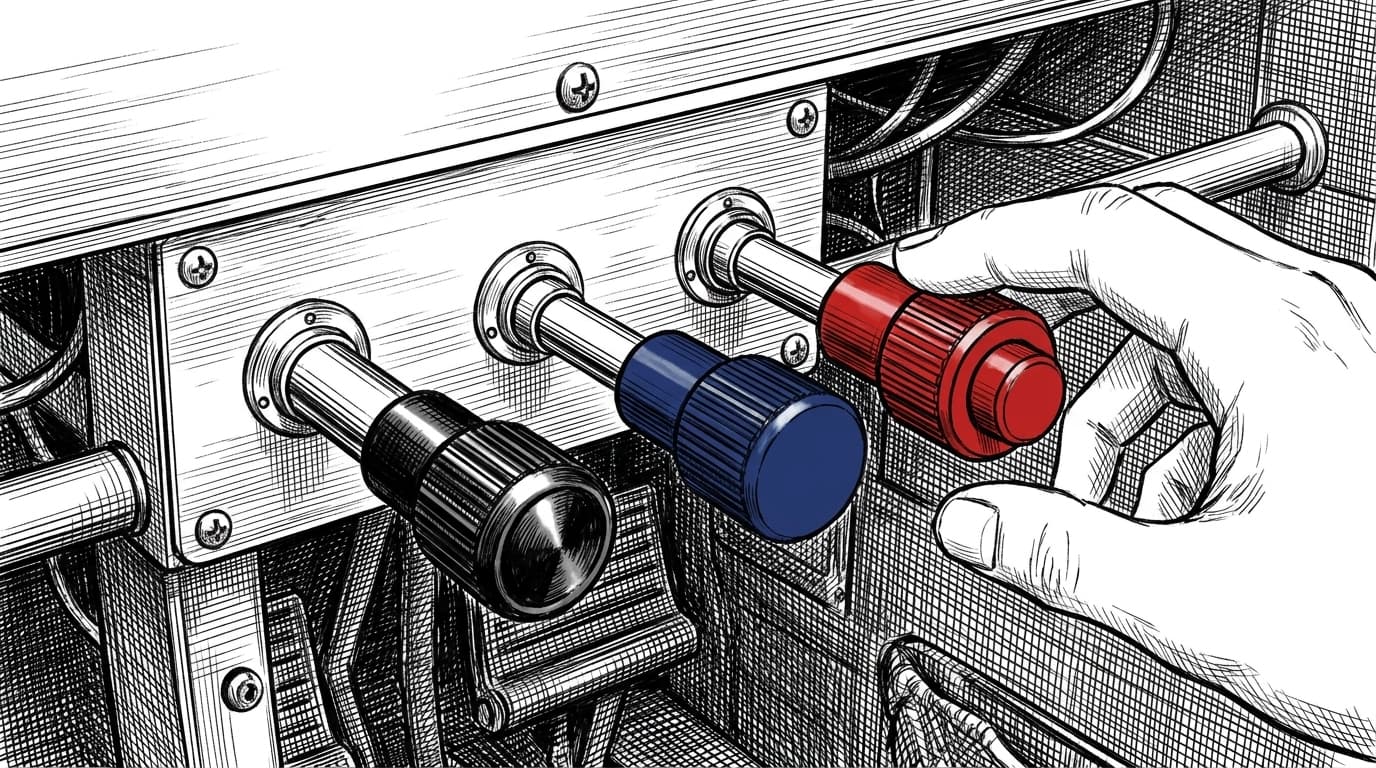
Start with the black one. A piston engine is most efficient at wide open throttle, full stop. Pulling the throttle back closes a butterfly valve across the engine's air supply and drops its volumetric efficiency. Busch's picture for it is somebody with their hands around your throat: you can still work, but not well.
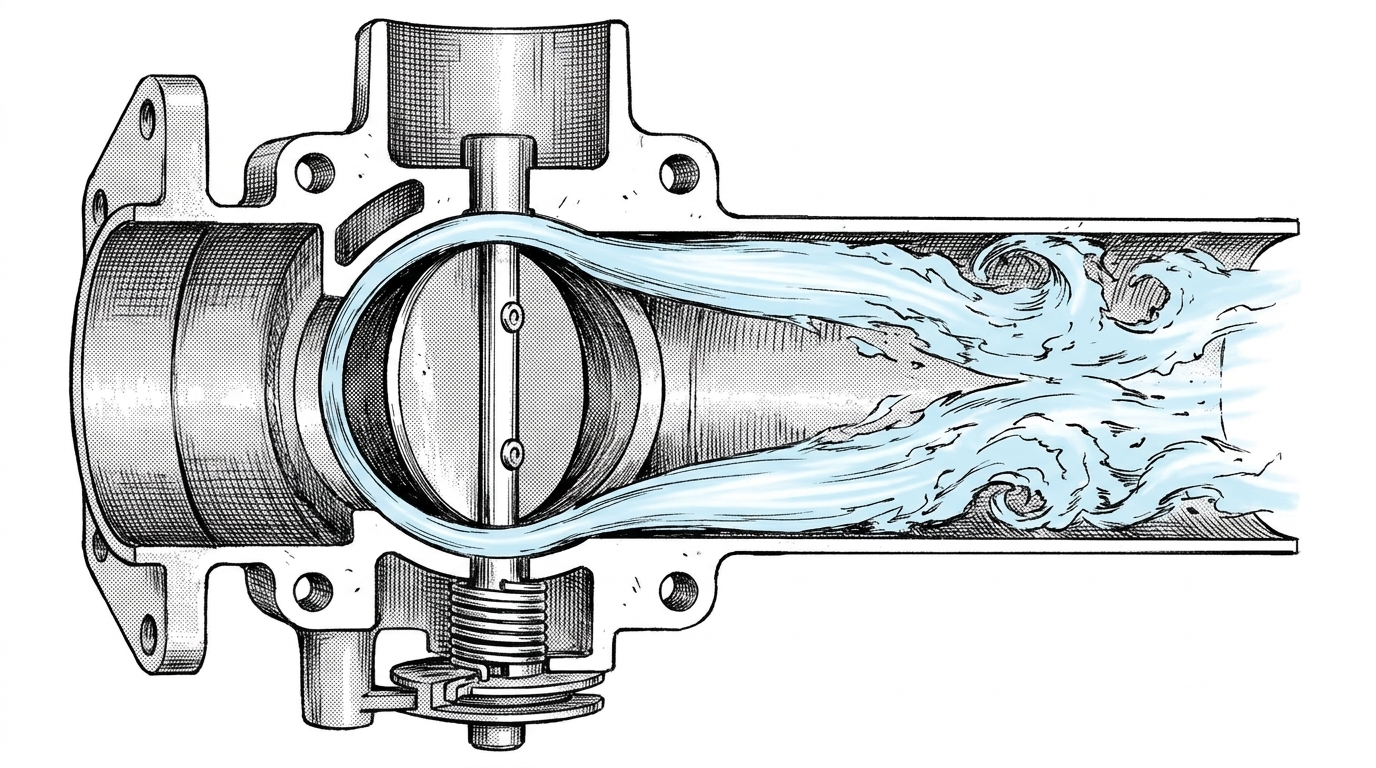
Most normally aspirated engines, most turbo normalised engines, and mildly boosted turbocharged engines like his can run at wide open throttle all day. Some heavily boosted engines cannot and have to be pulled back to stay inside their limits. Even those should come back only as far as the book actually requires and no further.
Then the blue one, if you have it. Set RPM as low as the POH allows.
Three separate things improve at once. Friction inside the engine goes with the square of RPM, so a small reduction buys a large one. Propeller efficiency generally improves, partly because the tips stop generating shock waves. And the engine gets more time between the spark firing and the exhaust valve opening, which is the window it has to turn that combustion event into crankshaft rotation. Open the valve sooner and more of the burn leaves as hot gas instead of thrust.
Which is the same reason the old warning about never running oversquare has it precisely backwards. Higher manifold pressure with lower RPM is the efficient combination, not the dangerous one. Busch typically cruises about ten inches oversquare, at something like 32 inches and 2200 RPM, on engines now past 200% of TBO. That argument, and the flight test data behind it, is a subject of its own and we have covered it separately. Take it as settled here.
If you have a fixed pitch propeller, the blue knob decision was made for you at installation, and the only lever you have is which prop is bolted on. Most airframes approve several pitches. The coarsest one, the cruise prop, turns slower for a given power setting and burns less getting there. You give up some climb rate for it.
Then the red one. Lean aggressively. Best economy mixture is always well lean of peak EGT, typically somewhere between 30 and 70 degrees lean depending on altitude and conditions.
Without an engine monitor there is an old technique that gets you close: lean until the engine just starts to feel rough, then enrich only until the roughness disappears. Stop there. Some pilots were taught to add another quarter inch or another turn for safety, and that quarter inch is exactly the fuel you were trying to save.
If the engine is running rough, it is talking to you. Enrich until it stops complaining and no further.
The speed nobody taught you
Now the part that is not a knob.
There are three airspeeds worth knowing about, and most pilots have only ever heard of one.
The first is best L/D, the speed for maximum lift over drag, which you already know as best glide. It is the speed that gets you the greatest distance out of a given quantity of fuel. It is also, in most airplanes, painfully slow.
The second is maximum endurance speed, which is best L/D divided by 1.316. That is the speed that keeps you airborne the longest on a tank of fuel, which is what you want if you are flying a pipeline patrol or spotting fish and have no particular interest in arriving anywhere. It is slower still, flown with the nose noticeably up, and no one cruises at it.
The third is the interesting one, and it comes from an aeronautical engineering professor at the US Naval Academy named Bud Carson. It is best L/D multiplied by that same 1.316, and it is variously called optimum cruise speed or, more usually, Carson speed.
Best L/D minimises fuel per mile and ignores your time completely. Carson asked a different question: given that pilots are going to fly faster than best L/D anyway, what is the least wasteful way to do it? His answer minimises fuel flow per knot of airspeed, which is to say it optimises the two things a pilot actually cares about at once rather than one of them perfectly.
The arithmetic of the bargain is worth sitting with.
Thirty-two percent more speed for sixteen percent more fuel.
Getting that extra speed takes 52% more power, which sounds ruinous. But it also cuts 24% off the flight time, and the shorter flight is what pays for most of the extra burn. You end up ahead on the clock by nearly a quarter and behind on fuel by a sixth.
Here is what those three speeds look like in real airplanes, all indicated:
| Best L/D | Max endurance | Carson | |
|---|---|---|---|
| Cessna 172 | 65 kt | 49 kt | 86 kt |
| Cessna 210 | 88 kt | 67 kt | 116 kt |
| Cessna 310 | 111 kt | 84 kt | 146 kt |
Look at the 172 column. Best range in that airplane is 65 knots, which nobody is going to fly across a state. Carson speed is 86, which is a perfectly reasonable cruise, and it is the cheapest 86 knots available to you.
Why all of it forces you to climb
Four requirements: throttle wide open, RPM at the bottom of the range, mixture aggressively lean, airspeed at Carson.
Down low they fight each other. Wide open throttle near sea level produces far more power than Carson speed needs, so you end up going much faster and paying for it. You can throttle back to slow down, but now you have given up the first rule.
The way out is altitude. Climb until wide open throttle produces roughly Carson speed and all four conditions are satisfied at once.
For a normally aspirated airplane that lands somewhere around 11,000 or 12,000 feet, because the atmosphere takes your manifold pressure away for you as you climb. For a turbocharged airplane the manifold pressure stays put, so what has to fall is indicated airspeed as the air thins, and that usually means the low flight levels.
There is a catch, and it is a real one. Climbing to 12,000 feet costs fuel, and on a short leg you never get it back. Busch will not go to the flight levels for anything under about two and a half hours. For a normally aspirated airplane climbing to 11 or 12, the break even is a good deal shorter, but you still would not do it for a forty minute hop. Working out the exact crossover for a given airplane is genuinely messy arithmetic. The rule of thumb is that all of this advice is for long legs, and short legs are inefficient no matter what you do.
The gauges stop meaning what they meant
Somebody on the webinar asked which manifold pressure marking counts as wide open throttle on a T210: the 36.5 inch redline, the top of the white arc at 35, or the top of the green at 30.
The honest answer is that lean of peak, none of them mean anything.
Every arc and marking on your manifold pressure gauge and your tachometer was drawn on the assumption that you are operating rich of peak. That assumption matters, because rich of peak the engine's power is set by mass airflow, and mass airflow is manifold pressure times RPM. Manifold pressure decides how much air gets packed in on each intake stroke, RPM decides how often that happens. Power is the product, and the arcs are meaningful.
Lean of peak, none of that holds. There is more air than the fuel can use, so airflow stops being the constraint and fuel flow becomes the whole story. Power is a straight function of how much fuel you are burning.
For a typical 8.5:1 compression engine, horsepower is gallons per hour times 14.9. Manifold pressure and RPM do not appear in that equation at all.
Which is a genuinely strange thing to get used to. Elliott Schiffman's Bonanza test showed it plainly: the same 12 gallons an hour lean of peak at 27 inches and 2100 RPM, and again at 21 inches and 2500 RPM. Identical fuel flow, therefore identical 179 horsepower, from two settings that look nothing alike on the gauges. What differed was that the high RPM run ran hotter, on both CHT and EGT, because of the extra friction and the earlier exhaust valve opening. Same power, more waste.
Busch's practical answer on the T210, incidentally, was to cruise it at 32 to 34 inches rather than the full 36.5, with RPM down at 2200 or below and the mixture well lean. Highly boosted engines are the one place where backing off the throttle a little is the right call.
What the savings are actually worth
A GPS coupled fuel totalizer is the single most useful instrument for this. It knows your fuel flow and your ground speed, so it can show you nautical miles per gallon directly and let you experiment with altitude and airspeed until the number stops improving. It also runs a continuous estimate of the fuel you will have left on arrival, which for long trips matters more than the efficiency readout.
I have an unbreakable rule that I land with an hour of fuel in the tanks. For my airplane that is 160 pounds. If the estimate ever drops below it, I am stopping.
Two popular economies are worth being sceptical about.
Shopping for cheap fuel is fine when you need the stop anyway. Adding a stop to buy cheap fuel almost never pays. The extra descent, landing, takeoff and climb burns more than the discount saves, and Busch has run the numbers for his own airplane at a dollar a gallon spread and still come out behind. It feels good not to hand seven dollars a gallon to an FBO. It does not save money.
Tankering fuel you do not need is the same mistake in a different shape. Fuel is weight and weight costs airspeed. Busch's 310 carries over 1,100 pounds of it, and he can watch the airplane speed up as it burns off.
While we are on things that do not pay: speed modifications that add horsepower mostly do not. Airspeed goes with the cube root of power, so a decent power increase turns into a barely visible speed increase; what you get instead is a better climb rate, since climb is a function of excess power. Drag reduction is where the money is. And drag mods stack badly, each one worth less than the one before it.
The best modification of all costs nothing and involves opening the baggage compartment and taking out everything that does not need to be there. Busch, who flies a 310 with a nose baggage compartment, two wing lockers and a large one in the back, cheerfully pleads guilty on this one.
A few things that are not true
Take off at redline RPM, always. The change in propeller efficiency across the RPM range is small, and on takeoff you are rich of peak, where power really is RPM times manifold pressure. You want all of both.
You do not need to keep the tanks full to prevent condensation. Busch has been flying for over four decades and cannot recall a single occasion of finding a meaningful amount of water in the sumps from condensation. The water he has actually found came from an airplane parked out in the rain with tired O-rings in the fuel caps. Bladder tanks are the one exception, and only when the airplane sits outside in serious heat, where a full tank keeps the top of the bladder from baking.
And you can absolutely run a carburetted engine lean of peak. Most carburetted Lycomings do it easily, sometimes wanting the throttle back a hair from wide open to close off the enrichment jet and even out the mixture distribution. The Continental O-470 in a 182 is genuinely awkward about it and still manageable with technique. Running rich to be kind to the engine has it backwards: the exhaust deposits that build up on valve stems and eventually stick a valve come from running too rich, and the worst offender of all is taxiing around at full rich.
The short version
Throttle wide open. RPM as low as the book allows. Mixture leaned to best economy, well lean of peak. Then climb until wide open throttle gives you Carson speed, which is your best glide speed multiplied by 1.316, and stay there.
Carson speed is the whole idea in one number. Best range speed is too slow for anyone to actually fly, so we all fly faster and waste fuel doing it. Carson worked out the cheapest possible way to waste it: a third more speed for a sixth more fuel, and a quarter off the flight time.
None of it applies to short legs, where the climb never pays for itself. All of it applies to the long ones, which are the flights where the fuel bill hurts.
One webinar attendee mentioned in passing that he had flown Guam to Jacksonville nonstop in a Lancair IV. 7,051 nautical miles on 355 gallons.
This article is based on the Savvy Aviation webinar Flying Efficiently in a World of $7 Avgas by Mike Busch.
Source: Flying Efficiently in a World of $7 Avgas - Mike Busch / Savvy Aviation